
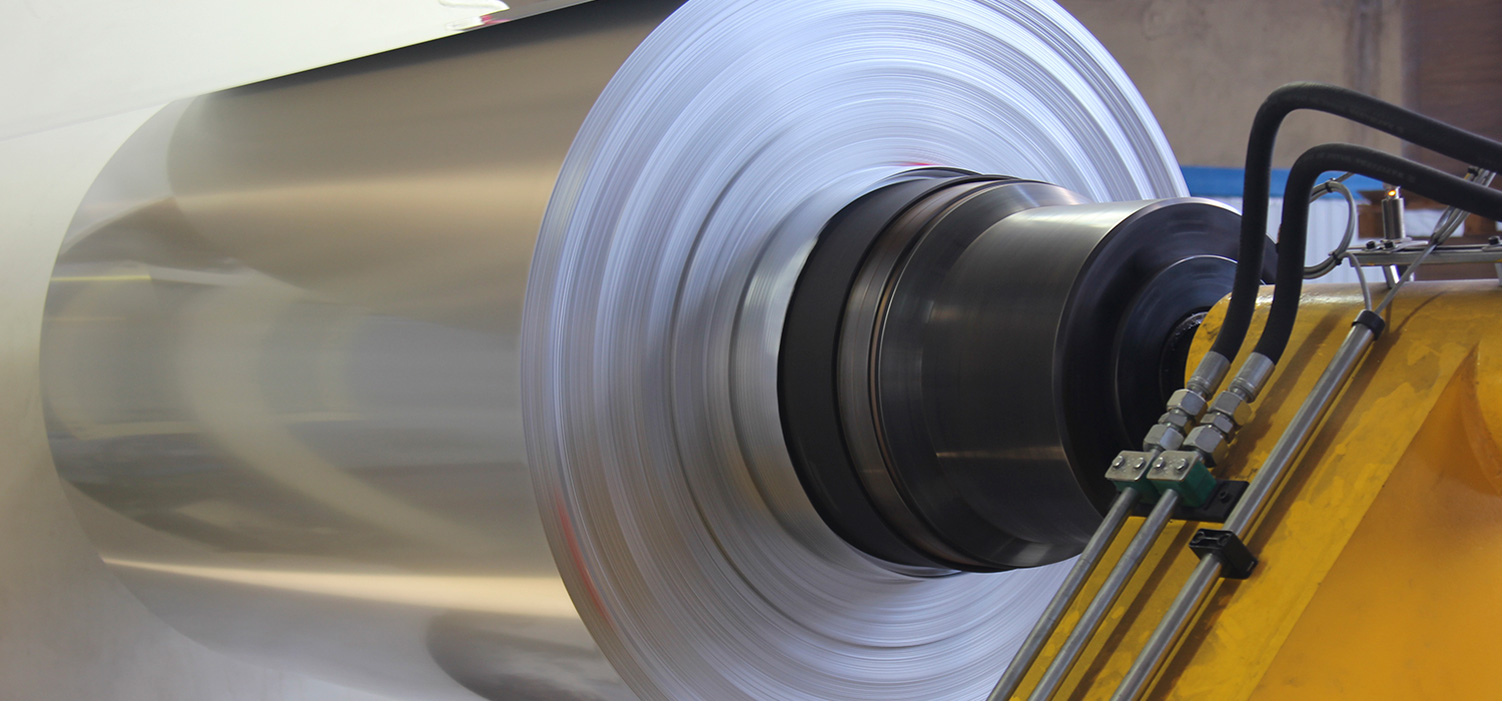

Aluminium is one of the most important and versatile materials in modern industry, with unique properties that make it suitable for a wide range of applications. It is the third most abundant element in the Earth’s crust, accounting for approximately 8% of its composition.
Its ability to adapt to different needs, together with its sustainable characteristics, makes aluminium an essential material for industrial development and innovation worldwide.
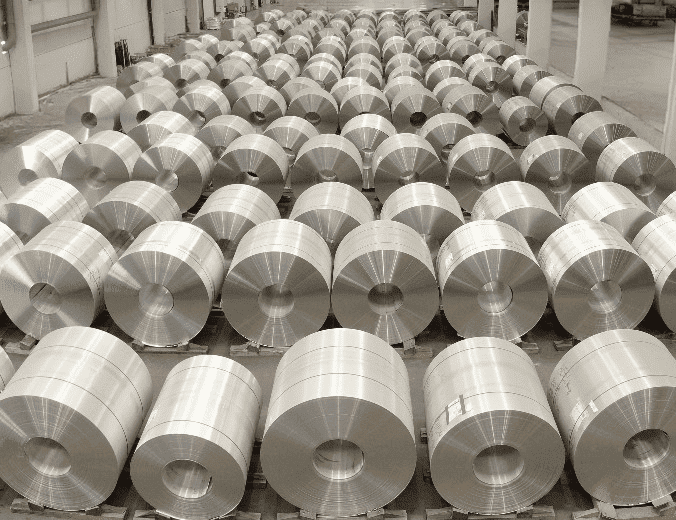
Once aluminium is produced in the form of ingots, it undergoes several additional processes to transform it into useful products, such as coils (COIL) and thin sheets (FOIL). These products are mainly obtained through rolling, a process in which aluminium is passed through a series of rollers that flatten it to the desired thickness.
The hot rolling process consists of heating large aluminium blocks (called slabs) to temperatures between 450 and 500°C and then passing them through rollers to reduce their thickness and form aluminium sheets. These sheets are then wound into coils, making them easy to handle and transport.
Once the coils are produced, they are often subjected to an additional cold rolling process, where the metal is rolled at room temperature to achieve greater thickness precision and improve the mechanical properties of the aluminium.
The resulting aluminium coils are used in a wide range of industrial applications, such as the manufacturing of components for the construction industry, mass transportation, automotive, aerospace, and the production of electronic components, among others.
Aluminium foil, or low-gauge aluminium, is produced from hot-rolled aluminium coils. Through a cold rolling process, the aluminium is reduced to an extremely thin thickness, reaching as little as 6 microns or less. During this process, the coils may be passed through rollers to obtain one shiny side and one matte side, depending on how the sheets are processed, although both sides are of equal quality.
Aluminium foil has a wide range of applications, particularly in food, packaging, pharmaceuticals, cosmetics, thermal insulation, batteries, and heat exchangers.
Aluminium has established itself as a benchmark material in numerous strategic sectors due to a set of characteristics that make it stand out compared to other materials: